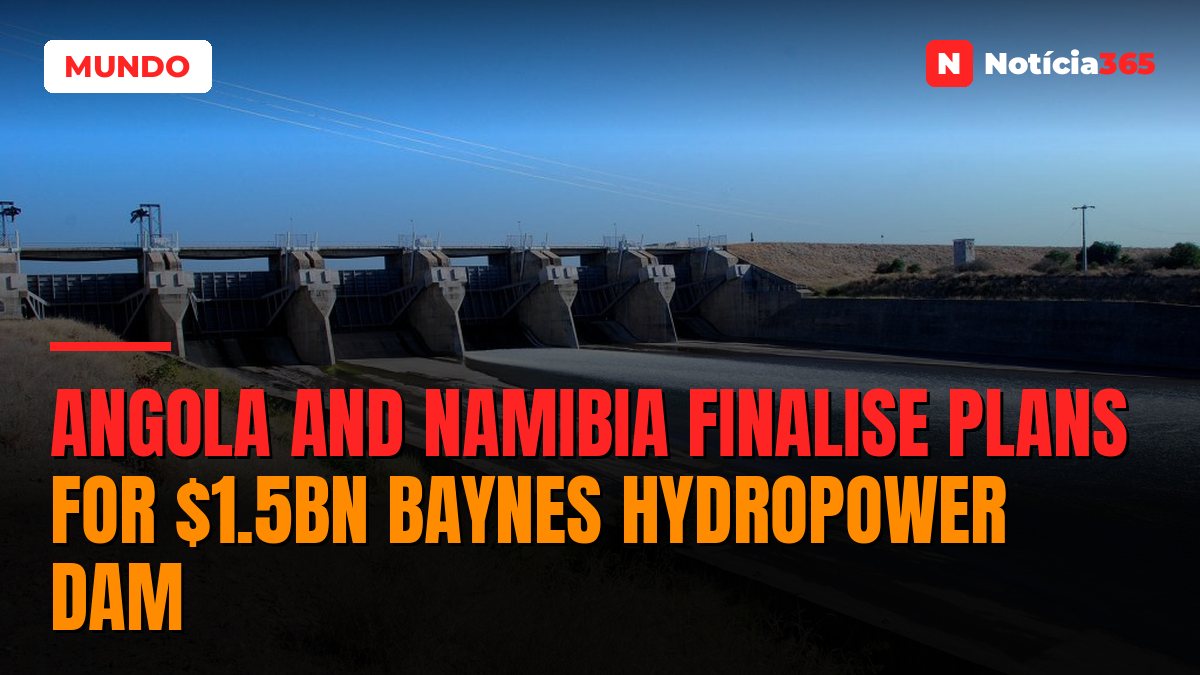

Angola and Namibia are putting the final preparations in place for the construction of the Baynes Dam, a joint hydroelectric project valued at approximately $1.5 billion. Located on the Cunene River along the border between the two countries, the development will have an installed capacity of 860 megawatts (MW), split equally between the two states.
The project was discussed on Friday, 16 October, in Luanda, during a meeting between Angola's Minister of Energy and Water, João Baptista Borges, and Namibia's Minister of Mines and Energy, Modestus Tshitumbe Amutse.
"We want this project to move forward as quickly as possible, bearing in mind that it is an important project for both countries," said João Baptista Borges.
According to the minister, the meeting provided an opportunity to assess the technical and administrative procedures still required and to discuss a timeline for the start of construction works, a date that remains to be confirmed.
Angola's Ministry of Energy and Water said the total investment is estimated at $1.512 billion and covers the construction of the main dam, with 860 MW of installed capacity, as well as a complementary flow-regulation structure with an additional 21 MW.
This second dam is designed to improve water management along the Cunene River and to reduce the environmental impacts associated with electricity generation. The projected construction period is five years.
Among the preparatory works under way is the improvement of access routes to the project site, particularly from the Port of Namibe, through which equipment and construction materials are expected to arrive.
The future power station is expected to strengthen electricity generation capacity in both countries, with each receiving 430 MW from the installed capacity of the main dam.
The project is also linked to the interconnection of the electricity grids of Angola and Namibia, as provided for under the Angola-Namibia Electrical Interconnection Agreement (ANNA), signed in April 2026.
This interconnection is expected to facilitate energy trade and contribute to supply security, while also promoting greater integration of electricity systems across Southern Africa.
Authorities also expect the construction of the dam to create jobs and opportunities for local companies, particularly in the supply of materials and services. Over the longer term, the development could support growth in agriculture, industry, tourism, and transport in the affected regions.
The agreement between the governments of Angola and Namibia for the construction and operation of the Baynes Dam was signed in November 2024 in Windhoek.
At the time, construction was projected to begin in 2026 and conclude in 2031. However, the need to complete outstanding technical, administrative, and financial procedures has left the timeline open.
Source: Diário Económico
Original article: https://www.diarioeconomico.co.mz/2026/10/17/mundo/angola/angola-e-namibia-preparam-construcao-de-barragem-avaliada-em-15-mm/