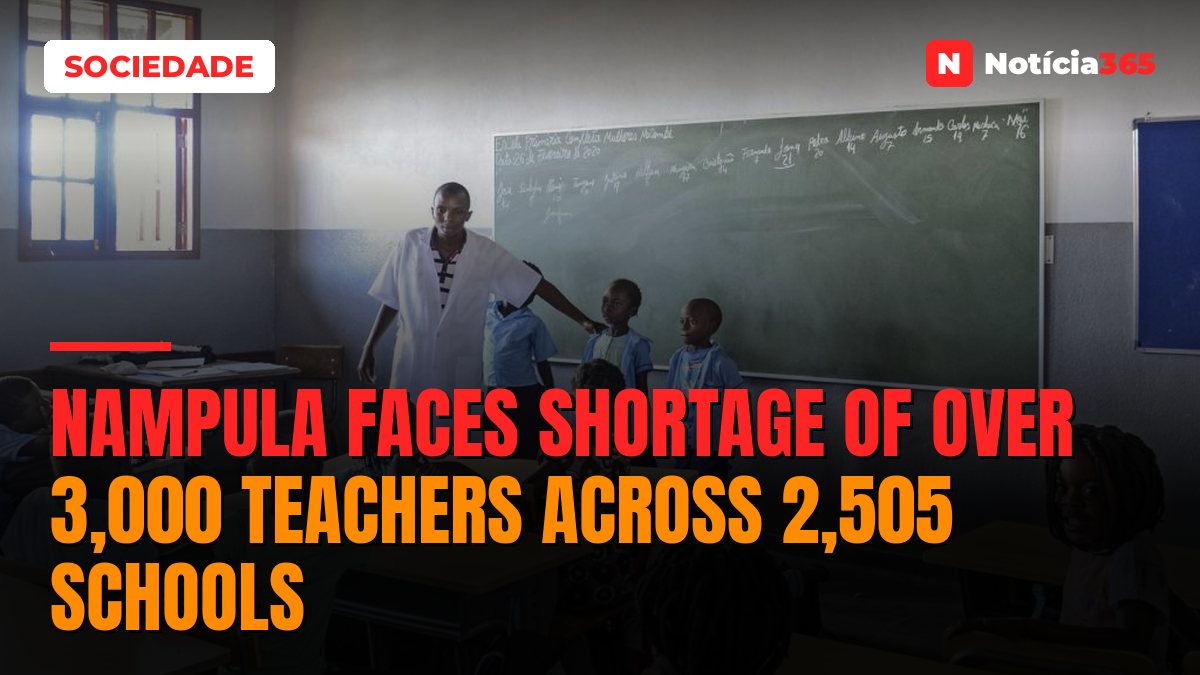

Nampula province, Mozambique's most populous, is grappling with a shortage of more than three thousand teachers at a time when its education system serves approximately two million pupils spread across 2,505 schools. The shortfall persists despite the recruitment of 351 new teachers in 2026, compounding human resources management challenges and straining the functioning of the provincial school system.
The figures were disclosed on Thursday (15) by the provincial director of education, William Tunzine, who acknowledged that the number of available teachers remains insufficient to meet the sector's needs, according to Lusa. "Despite the admission of 351 teachers in 2026, the deficit continues to represent a challenge for the sector, which has 2,505 schools and around two million pupils," Tunzine said.
According to data presented by the provincial directorate, Nampula currently has 33,242 civil servants and state agents working in the education sector, of whom 27,800 are teachers. Even so, the number of available teaching staff falls short of the province's requirements, a situation further complicated by health problems and mortality among education professionals.

William Tunzine noted that at least 1,169 sector employees are living with chronic illnesses, including 1,059 teachers. A further 305 workers are bedridden, among them 296 teachers — an additional strain on school operations. "The situation regarding teachers is very serious, very serious indeed. There are cases of teachers who abandon treatment, and that is grave," the provincial education director warned.
The provincial secretary of the National Teachers' Organisation (ONP) in Nampula, André Jane, revealed that around 1,200 teachers are dealing with various health conditions, including malaria, hypertension, and HIV. The union official explained that, despite awareness and support campaigns carried out by the organisation, some teachers continue to fail to adhere consistently to prescribed medical treatments, increasing health risks.
Access to medical care and medication represents another major challenge facing education professionals in the province. According to the ONP, salary deductions made for healthcare coverage have not been matched by the regular provision of health services, with estimates suggesting that available assistance covers only around half of actual needs.
The situation is further compounded by the number of teacher deaths recorded since the beginning of the year. According to the Provincial Directorate of Education, 147 teachers have died in Nampula since January 2026, including cases attributed to suicide and sudden death. "This year alone we have lost 147 colleagues, two of them to suicide and seven to sudden death," William Tunzine disclosed.
In light of these challenges, the provincial director called for greater flexibility in human resources management to address the difficulties facing the sector, particularly with regard to teacher availability and the health conditions of education professionals. Tunzine also stressed the importance of strengthening support measures for teachers, taking into account issues related to indebtedness, mental health, and suicide prevention.
The teacher shortage, compounded by the health problems affecting a significant portion of the workforce, thus remains one of the central challenges confronting Nampula's education sector, demanding measures to expand the teaching roster and improve working conditions in the province's schools.
Source: Diário Económico
Original article: https://www.diarioeconomico.co.mz/2026/10/15/desenvolvimento-2/nampula-defice-de-mais-de-3-mil-professores-afecta-sector-da-educacao/