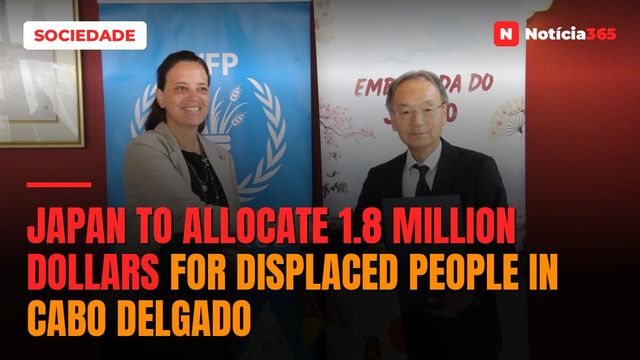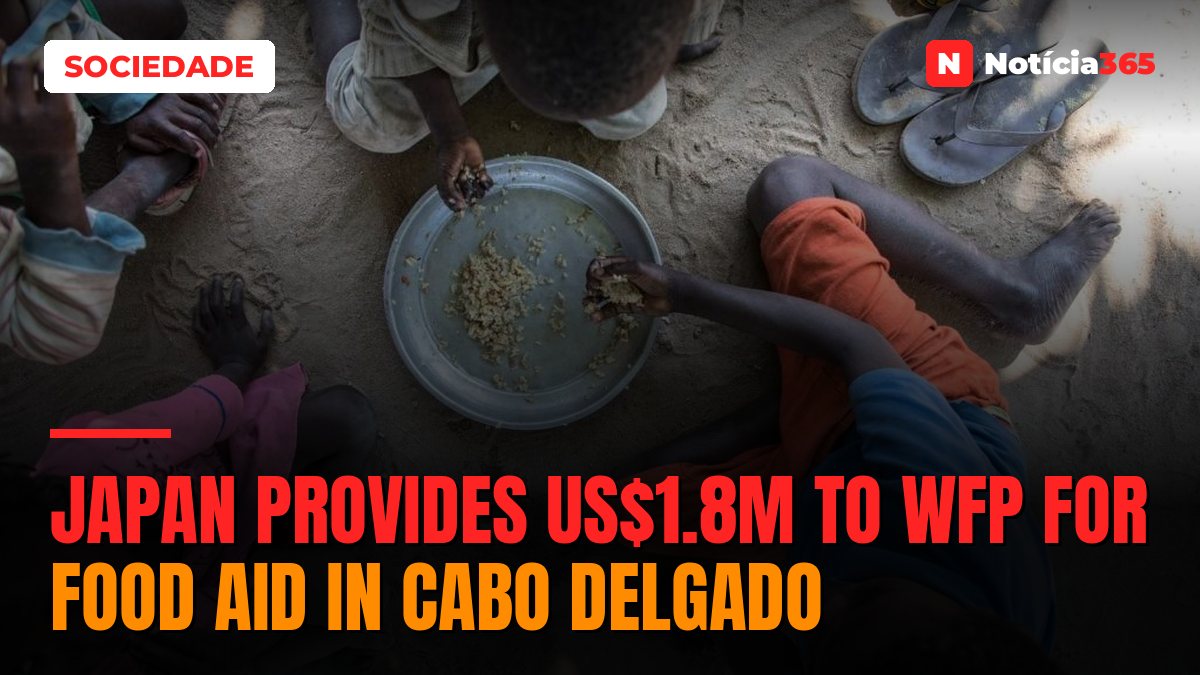

The Government of Japan will provide US$1.8 million through the World Food Programme (WFP) to support approximately 94,000 people affected by the armed conflict in Cabo Delgado. The contribution was formalised on Wednesday, 14 October, in Maputo, and is earmarked for the distribution of rice and canned fish.
"This contribution will enable support for approximately 94,000 internally displaced persons and other people affected by the conflict in Cabo Delgado through the distribution of rice and canned fish," said Japan's Ambassador to Mozambique, Keiji Hamada, at the signing ceremony.
According to the diplomat, the assistance will help families meet their basic food needs. Hamada added that since 2019, Japan has contributed approximately US$21.38 million to WFP operations in the country.

WFP Country Director for Mozambique Claire Conan, quoted by Lusa, said the funding arrives at a time when humanitarian needs remain high and resources are insufficient to support all vulnerable populations.
Conan explained that the assistance aims to prevent families from resorting to harmful coping strategies to deal with food shortages. "This support from Japan is not only timely, it is deeply meaningful," she said, expressing gratitude for the Japanese government's contribution.
Conan also warned of the potential effects of the El Niño phenomenon. She noted that a worsening drought could increase the number of families facing food insecurity, in a context of severe constraints on humanitarian financing.
At the same event, the Deputy President of the National Institute for Disaster Management and Risk Reduction (INGD), Gabriel Monteiro, highlighted Japanese cooperation in humanitarian assistance and disaster prevention. He cited as examples Japan's support for the construction of drainage systems in Beira, Sofala, and ongoing studies to find solutions to urban flooding in Maputo and Matola.
Cabo Delgado has been facing an armed insurgency since 2017, which has killed more than 6,600 people and forced more than 1.2 million to abandon their homes, according to international organisations.
According to figures cited by Lusa, approximately 1.38 million people continue to live with the effects of the conflict, including around 662,000 internally displaced persons and 722,000 people who have returned to their areas of origin.
Source: Diário Económico
Original article: https://www.diarioeconomico.co.mz/2026/10/14/economia/desenvolvimento/cabo-delgado-japao-disponibiliza-18-milhao-de-dolares-para-assistencia-alimentar/