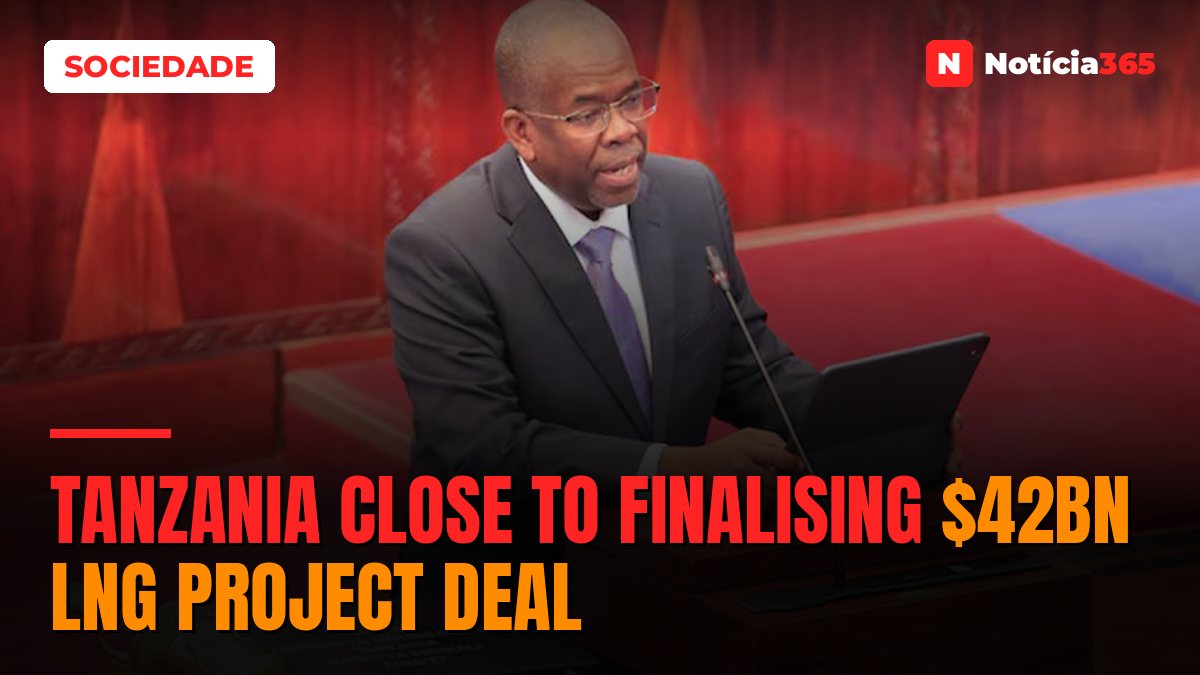

Tanzania expects to finalise within months agreements covering major investment projects, including a liquefied natural gas (LNG) venture valued at $42 billion that authorities say will drive the country's industrialisation, Finance Minister Khamis Mussa Omar told Reuters.
The LNG project, led by Equinor and Shell, forms part of a broader strategy to transform East Africa into a major energy hub. It is advancing in parallel with Uganda's plans to begin its first oil exports through the Tanzanian port of Tanga in early 2027.
The venture is designed to unlock natural gas reserves estimated at 47.13 trillion cubic feet. In addition to Equinor and Shell, the project's partners include ExxonMobil, Pavilion Energy, Medco Energi, and state-owned Tanzania Petroleum Development Corporation. Authorities had been targeting a signing of the LNG agreement before June.
"It is almost done," Omar said. Equinor and Shell did not respond to requests for comment. While the bulk of production is intended for export, a portion will be reserved for the domestic market.
Critical Minerals Agreements Near Completion
The minister said Tanzania intends to nearly double its electricity generation capacity, raising it to 8,000 megawatts by 2030. The government also aims to increase to around 75% the share of energy derived from sources it classifies as clean, including hydropower, solar, wind, and natural gas.
Omar added that agreements relating to two critical minerals projects are close to completion, though he declined to provide further details. He noted that American investors are showing particular interest in the energy and critical minerals sectors. According to Omar, the government is seeking to attract greater international investment into projects capable of generating revenues and funding their own operations.
Government Moves to Diversify Funding Sources
Tanzania has yet to decide whether to issue a bond on international markets, but is working to attract foreign investors to its domestic public debt market. In July, the government expanded foreign investor access to the domestic bond market, and in August it launched a sovereign yield curve.
Reforms have also been approved to stimulate corporate debt issuance. Despite these measures, the country continues to assess the risks of greater foreign participation, while the central bank studies the experience of other African economies.
The initiative reflects a broader trend among frontier markets seeking to capitalise on international demand for local-currency-denominated debt instruments. Tanzania currently finances two-thirds of its budget, valued at approximately $23.7 billion, through domestic revenues. Official development assistance, which previously accounted for 40% of the budget, has diminished in significance and now represents a "very insignificant" share, according to Omar.
"The LNG project, led by Equinor and Shell, forms part of a broader strategy to transform East Africa into a major energy hub. It is advancing in parallel with Uganda's plans to begin its first oil exports through the Tanzanian port of Tanga in early 2027."
The government is also evaluating whether to request a new financing programme from the International Monetary Fund (IMF), with a decision expected by June. The previous $1.7 billion programme — which included the Extended Credit Facility and the climate-focused Resilience and Sustainability Facility — expired in July.
Omar reiterated that agreements on two critical minerals projects are nearing conclusion, while declining to elaborate. He noted that American investors are showing particular interest in the energy and critical minerals sectors, and said the government is seeking to draw more international capital into revenue-generating, self-financing projects.
Source: Diário Económico
Original article: https://www.diarioeconomico.co.mz/2026/10/14/mundo/africa/tanzania-perto-de-finalizar-acordo-de-42-mm-para-projecto-de-gnl/