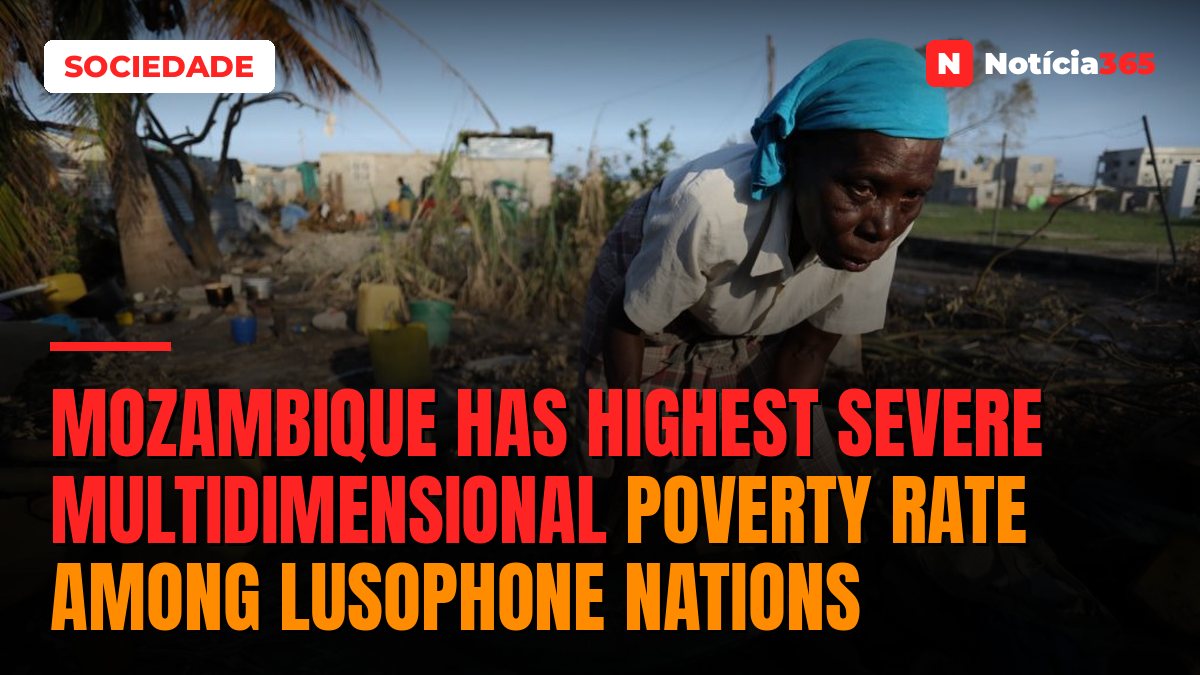

Mozambique has the highest proportion of population in severe multidimensional poverty among the Portuguese-speaking countries analysed in the 2026 Global Multidimensional Poverty Index, at 38.8%. Guinea-Bissau follows at 35.9%, and Angola at 29.6%. The figures are drawn from surveys conducted in different years.
Published by the United Nations Development Programme (UNDP) and the Oxford Poverty and Human Development Initiative, the report estimates that 1.2 billion people across 108 countries live in multidimensional poverty.
That total represents 51.5 million more people than in the previous edition — the first increase recorded since the index was launched in 2010. Part of the rise is attributable to population growth and therefore does not reflect exclusively a deterioration in living conditions.
Of all those affected, 83% live in rural areas and more than half are children.
The index measures simultaneous deprivations across health, education, and living standards through ten indicators. Aspects assessed include nutrition, schooling, access to clean water, sanitation, electricity, and housing conditions.
Severe poverty and overall incidence are distinct indicators
Severe multidimensional poverty affects 17.4% of Timor-Leste’s population, 2.1% of São Tomé and Príncipe’s, and 0.9% of Brazil’s.
These figures refer to the most acute deprivation situations and not to the total population living in multidimensional poverty. Under this broader indicator, Guinea-Bissau records the highest proportion among the lusophone countries analysed, at 64.4%, followed by Mozambique (60.7%), Angola (49.3%), Timor-Leste (48.3%), São Tomé and Príncipe (11.7%), and Brazil (3.8%).
Comparisons also require caution regarding the currency of the underlying data. Mozambique’s results are based on a 2022–23 survey and Angola’s on a 2023–24 survey. Guinea-Bissau’s data dates from 2018–19; São Tomé and Príncipe’s from 2019; Timor-Leste’s from 2016; and Brazil’s from 2015.
The 2026 edition covers countries representing approximately 78% of the world’s population. The publication date does not therefore imply that all situations described were measured in the current year.
Source: Diário Económico
Original article: https://www.diarioeconomico.co.mz/?p=551698