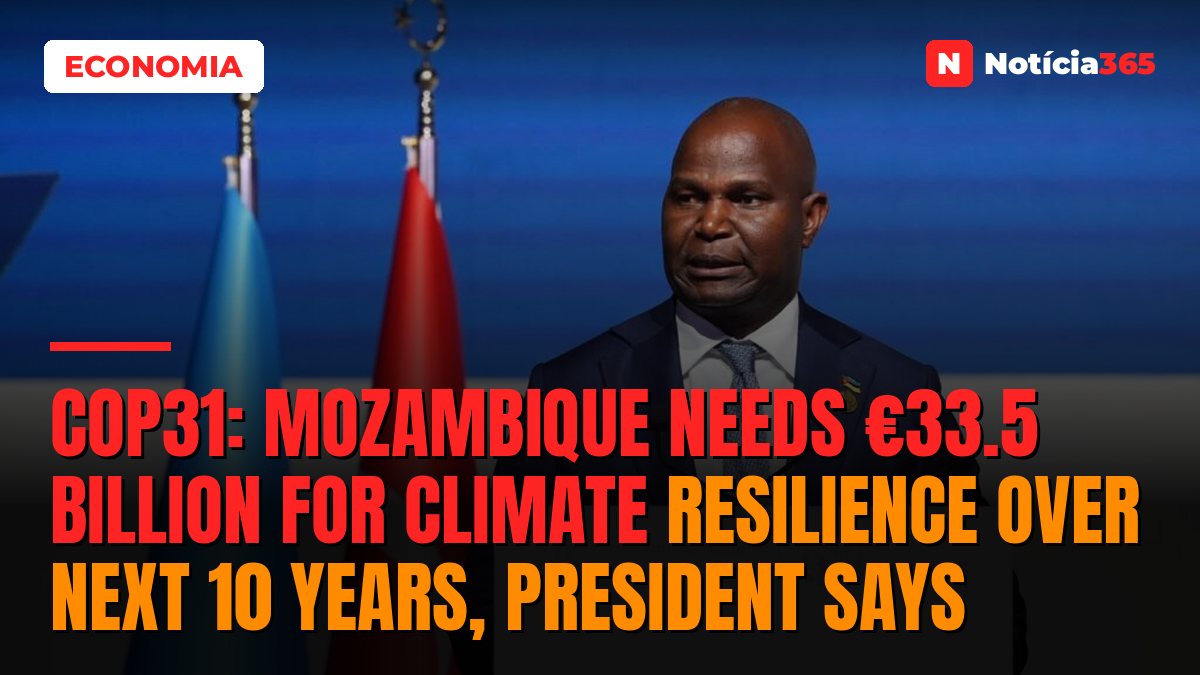
Mozambican President Daniel Chapo on Wednesday appealed for €33.5 billion to strengthen climate resilience in Mozambique over the next 10 years, following more than 76 natural disasters recorded over the past 25 years.
“To strengthen resilience and protect the population, Mozambique needs around US$37.2 billion (€33.5 billion) over the next ten years. We therefore appeal for support from bilateral and multilateral partners and other relevant stakeholders,” Daniel Chapo said during the 31st United Nations Climate Change Conference (COP31), taking place in Türkiye.
According to the Head of State, Mozambique was hit by more than 76 climate events, including floods, inundations and cyclones, between 2000 and 2025, resulting in human and economic losses exceeding US$4.5 billion (€4.1 billion).
“Against this backdrop, we have adopted climate adaptation and disaster risk reduction as strategic priorities (…). We have adopted the National Adaptation Plan, which prioritises strengthening early warning systems and integrating the climate dimension into local planning,” the President said, adding that the country has at least 141 local adaptation plans and more than 1,500 local disaster risk management committees.

Photo: Presidência da República de Moçambique
Chapo also called on the international community to step up its support for African countries in preventing climate-related risks and building resilience, as part of broader efforts to advance climate justice and climate finance.
Referring to the 10th anniversary of the adoption of the Paris Agreement, the Mozambican President also highlighted the need for major economies to take the lead in reducing emissions and honour their climate financing commitments.
Mozambique is considered one of the African countries most vulnerable to the effects of climate change, regularly facing floods, tropical cyclones and severe storms.
According to the National Institute for Disaster Risk Management and Reduction (INGD), the last rainy season, from October 2025 to April 2026, caused 311 deaths and affected around 1.07 million people.