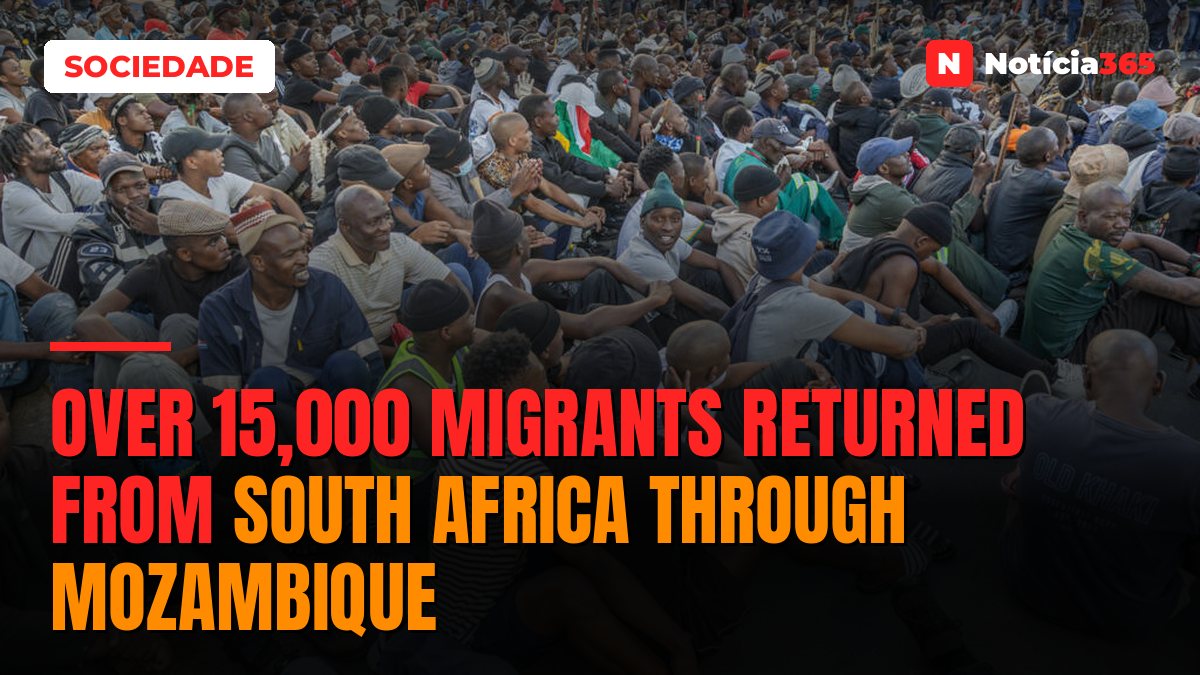
The International Organization for Migration (IOM) recorded at least 15,394 migrants returning from South Africa, passing through Mozambique due to violence related to anti-immigration demonstrations in that neighboring country.
According to the IOM Migration Flow Monitoring Survey, these people returned from South Africa between April and July 2026.
The survey, covering the period from January to July 2026, reports that the majority of the migrants observed were citizens of Malawi transiting through Mozambique on their way back to their home country.
These are 11,699 Malawians, corresponding to 76 percent, and 3,695 people corresponding to 24 percent. “Adult men constituted the majority of those returning, representing 73 percent of the total, compared to 22 percent for adult women. Children under the age of 18 accounted for five percent of the recorded movements”, reads the document.
Monitoring took place at the Ressano Garcia border post, on the border between Mozambique and South Africa, and at the Zóbuè border post, on the border with Malawi. Between January and June 2026, the organization recorded 86,814 cross-border movements at these two locations, split equally between entries into and departures from the country.
Among the returning Mozambicans, 42 percent were headed to the southern province of Gaza, followed by 18 percent to the southern Inhambane and 14 percent to Maputo city and province.
According to IOM, 74 percent of the migrants received assistance with transport to their final destinations, while 20 percent stated that they required additional support to continue their journey. The remaining six fully funded the return.
Migratory flows, the document says, decreased in April, coinciding with reports of mobility restrictions in South Africa gathered by teams on the ground. Movements increased in the following months, before decreasing again at the end of June.
Although South Africa is the continent’s largest economy, it faces an unemployment rate exceeding 30% and deep social inequalities. In recent months, various South African nationals carried out anti-migrant protests against Africans, including Mozambicans. The focus of these xenophobic acts, which have been recurring, was black Africans.
Discrimination against foreign nationals has also led to looting, displacement, harassment, and deadly riots, in informal settlements. Thousands of Mozambicans have been forced to abandon their homes and livelihoods, while others faced an environment of insecurity marked by threats, assaults, and the destruction of property.
Some South African political parties (Action SA and Inkatha Freedom Party) had also joined demonstrations, claiming that they were protesting undocumented migrants.
Source: AIM