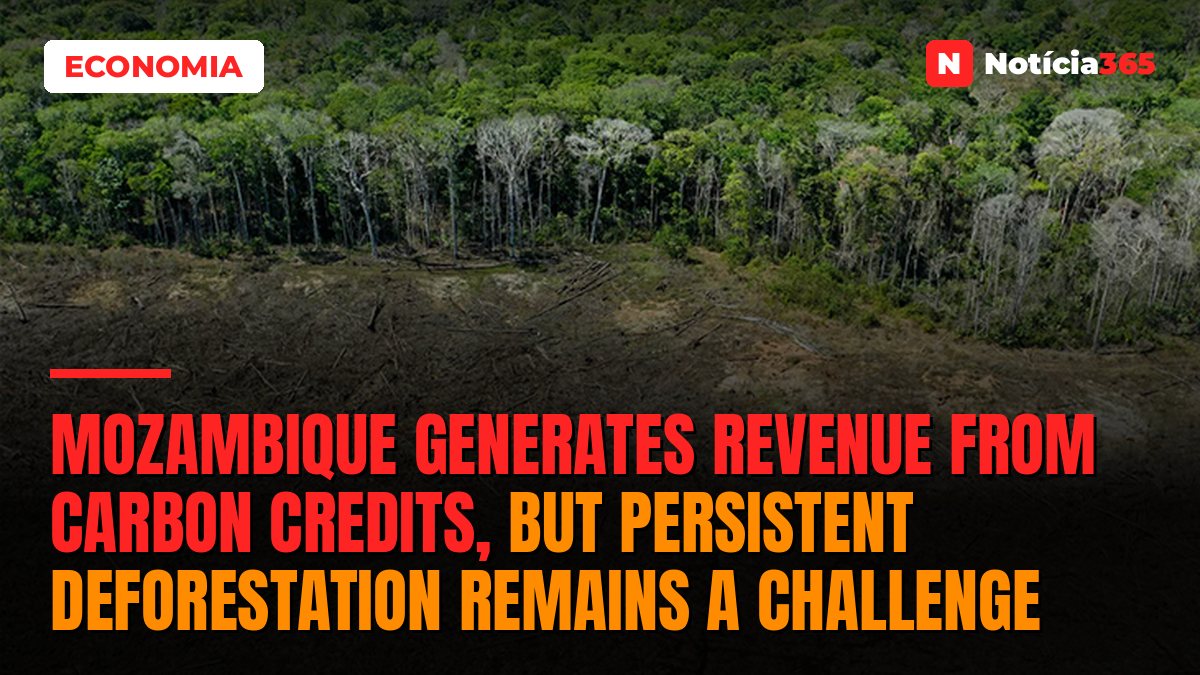
Mozambique has begun transforming its forest heritage into a viable source of climate finance. The country has generated over six million US dollars through the carbon market, but experts warn that the full potential of this mechanism remains constrained by deforestation, weak enforcement, and a lack of long-term investments.
The topic dominated the second and final day of the Climate Finance Forum in Maputo, where participants also discussed green finance mechanisms and sustainable forest management.
According to experts, a key challenge lies in integrating investments across agriculture and forestry to reduce pressure on natural resources.
“There is intense pressure from the illegal exploitation of existing natural resources. A more substantial investment is required, but this investment cannot be limited strictly to enforcement. It requires an integrated process. We must employ the approach discussed since the early 2000s—participatory monitoring integrated with community-based natural resource management,” explained forestry engineer Aristides Muhate.
The expert argued that financing must be sustained and directly engage local communities that depend on natural resources.
“Financing cannot be a temporary transaction where money is handed over and the funder exits. It must fund ongoing activities in both agriculture and forestry. For the forestry sector to thrive, agriculture must be well structured,” he added.
Another highlighted obstacle relates to agricultural practices that exacerbate pressure on forests. Muhate noted that low technology adoption and limited extension services for smallholders hinder deforestation reduction efforts.
“Agriculture relies on rudimentary methods. We use basic tools, do not invest in soil fertilization, lack extension services covering all farmers, and lack technical assistance for improved seeds and technology,” he explained.
Mozambique also faces the challenge of ensuring carbon projects meet international certification standards. Experts warned that any operational lapse risks eroding the market credibility of generated credits.
“Every failure in this cycle practically compromises the entire process. Hence, full alignment with internationally valid procedures and certification standards is imperative,” warned carbon market specialist Luís Nhamuchua.
Nhamuchua called for expanded domestic capacity building to master international frameworks and adapt these processes to Mozambique’s operational reality.
Despite these hurdles, the carbon market is producing tangible financial returns for the country. Mozambique generated over six million dollars in a carbon credit transaction—an experience that, according to the Government, yielded critical operational lessons.
“The country received a payment of six million dollars from that operation. It was a challenging exercise that provided key lessons. We cannot trade carbon credits on the grounds of nature conservation on one hand while driving deforestation on the other,” explained Albano Manjate, National Director of Climate Finance.
The official emphasized that forest preservation is vital to safeguarding the credibility of carbon credits and preventing environmental degradation from undermining market pricing.
“That contradiction jeopardizes the credibility of the carbon credits themselves and ultimately depresses their market value,” he added.
Beyond carbon trading, the Government is exploring alternative financial instruments, including debt-for-nature swaps, to support conservation without encouraging deforestation.
The deliberations concluded with the creation of a national project portfolio to mobilize climate finance. The initiative will serve as a baseline to guide the national resource mobilization strategy and facilitate access to funding for climate, forestry, and sustainable development projects.