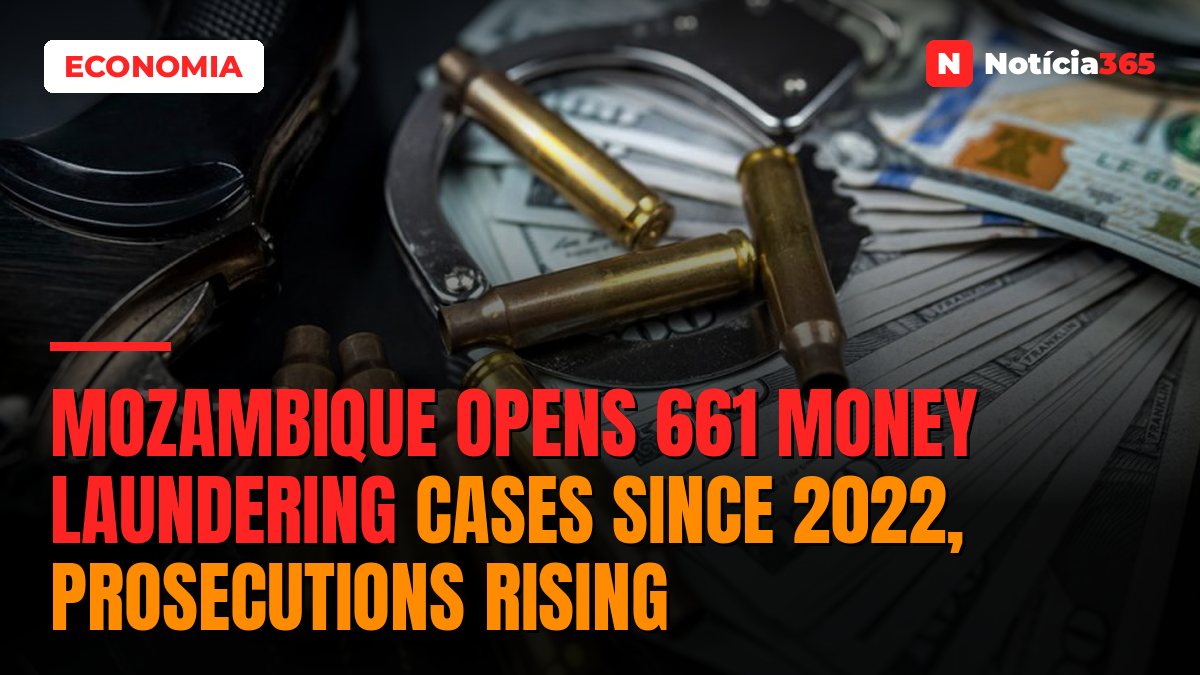

Mozambican authorities have opened 661 cases related to money laundering since 2022, of which 358 have resulted in formal charges, according to data released on Friday, 13 November, by the Central Office for Combating Organised and Transnational Crime (GCCCOT), which warned of a growing trend in organised crime across the country.
The figures were presented in Maputo by GCCCOT magistrate and spokesperson Biel Andifoi during a session marking the International Day for the Prevention and Combat of Organised and Transnational Crime, observed on 15 November.
According to Andifoi, money laundering cases form part of a broader universe of 7,476 organised crime cases opened since 2022, which also encompass drug trafficking, terrorism, and human trafficking.
Of the total, 5,789 cases relate to drug trafficking, with 3,786 individuals charged and referred to the courts. In the area of terrorism, 998 cases were opened involving 464 accused persons, while human trafficking accounted for 28 cases resulting in 24 people charged.
The new data follow revelations made in April by Attorney General Américo Letela, who disclosed that the number of money laundering cases had increased by 19.4% in 2025, rising from 191 in 2024 to 228 the following year.
During the presentation of the Attorney General's Office (PGR) Annual Report to the National Assembly, the 228 new cases were added to 428 carried over from previous periods, bringing the total to 656 cases in progress during 2025.
On the same occasion, the Public Prosecution Service disclosed that it had frozen more than four billion meticais in assets linked to money laundering proceedings, underscoring the financial scale of investigations conducted by the authorities.
Regarding 2026, Andifoi indicated that the Office has received 384 cases since January, primarily related to economic and financial crimes, including money laundering and terrorism financing.
"The trend is upward," the magistrate said, attributing the increase in recorded cases to the institution's expanded presence in the provinces through focal points embedded within Public Prosecution bodies.
"Our objective is not only to impose penalties on defendants, but also to strip them of the proceeds of criminal activity, in order to make clear to the community that crime does not pay," Andifoi said.
Andifoi also identified the use of cryptocurrencies as one of the key challenges facing authorities in financial investigations, explaining that suspects are increasingly turning to crypto assets to move funds and obscure the origin of resources.
To strengthen investigative capacity, six magistrates and six criminal investigators received specialised training on crypto assets in Qatar, as part of broader efforts to improve mechanisms for tracking and tracing suspicious financial transactions.
Asset Recovery
In the area of asset recovery, the GCCCOT revealed that approximately 400 million meticais have been frozen in suspects' accounts over the past nine months. This figure refers to the period cited by the Office and is distinct from the more than four billion meticais reported by the PGR in relation to 2025.
In one money laundering case, authorities seized close to 20 properties, 70 vehicles, and monetary assets exceeding US$4.2 million, including approximately US$3.6 million converted from meticais, with the assets channelled to the relevant mechanisms for recovery and asset management.
At the opening of the session, Deputy Attorney General Lucas João called for stronger cooperation between national and international institutions, improved information sharing, and closer monitoring of financial flows associated with organised crime.
"Financial investigation and asset recovery must go hand in hand with criminal investigation," the magistrate said, emphasising the importance of targeting not only the perpetrators of crimes but also the financial mechanisms used to move illicitly obtained resources.
The data are released just over a year after Mozambique was removed, in October 2025, from the grey list of the Financial Action Task Force (FATF), on which it had remained since 2022 due to identified deficiencies in its mechanisms for preventing and combating money laundering and terrorism financing.
The session was held under the theme "Follow the Money to Organised Fraud", highlighting the centrality of financial investigation and asset recovery in the fight against transnational organised crime.
Source: Diário Económico
Original article: https://www.diarioeconomico.co.mz/2026/11/13/economia/financas/autoridades-registaram-661-processos-de-branqueamento-de-capitais-desde-2022/