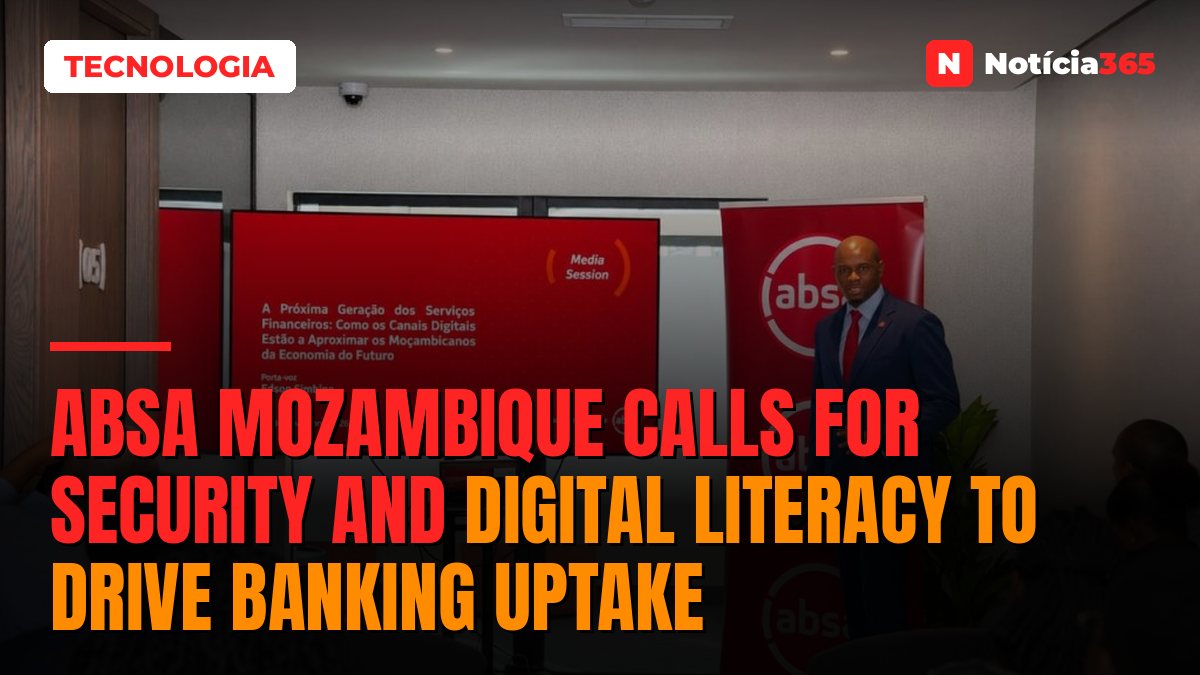

Expanding digital channels "must be accompanied by investment in security, literacy and customer support," Absa Bank Mozambique argued at a media briefing held on Thursday, 12 November, in Maputo. The institution emphasised that the adoption of new features depends as much on users' ability to understand services and transact with confidence as on the technology itself.
Edson Simbine, head of Channels at Absa Bank Mozambique, said digital transformation requires a continuous assessment of customer needs, combining operational simplicity with protection mechanisms and support structures.
The position was set out at a session attended by around 15 journalists, dedicated to the evolution of financial services, payment methods and the challenges of financial inclusion in the country.
According to Simbine, making new tools available must go hand in hand with information that enables customers to understand how they work and use them safely. The bank argued that innovation should respond to users' actual needs and facilitate access to financial services.
Contactless ATM transactions retain PIN authentication
Among the features discussed was contactless technology on automated teller machines, which allows customers to initiate a transaction by tapping their card against the reader without physically inserting it into the machine.
The solution was announced by Absa in September, as reported by Diário Económico. According to information released by the bank at the time, the feature is available across its entire ATM network and does not carry an additional charge for use.
The process retains PIN-based authentication: the customer taps the card, enters the PIN and completes the transaction while keeping the card in their possession at all times. The contactless method thereby reduces the risk of a card being physically retained by the machine.
The presentation of this feature framed a broader discussion on adapting banking channels to customer habits, without dispensing with clear guidance on operating procedures and security precautions.
Digital channels and in-branch service must complement each other
The session also addressed the need to maintain support for customers with varying levels of familiarity with technology. The expansion of electronic services was presented as complementary to in-branch assistance, allowing the bank to meet needs that cannot be resolved simply by launching an application or installing new equipment.
Absa's digital offering includes mobile applications, internet banking and the Absa Móvel service, accessible via USSD code *443#, as well as its ATM network. These channels provide different modes of access depending on the device available and the transaction required.
The discussion therefore placed user experience at the centre of the transformation agenda: understanding features, knowing how to obtain assistance and recognising suspicious activity are all conditions relevant to regular use of banking services.
Trust also depends on fraud prevention
Security and digital literacy were identified as complementary dimensions. Platform protection must be matched by customers' capacity to recognise fraud attempts and exercise care when using digital channels.
In security guidance published by Absa, the institution advises customers to be wary of any procedures that differ from their usual experience and to contact the bank if they suspect unauthorised access to their accounts. It also warns against fraudulent calls that seek to obtain credentials under the pretext of resolving an urgent problem.
The session aimed to clarify how the bank's channels function and what protection mechanisms are available, in a discussion that linked broader financial services uptake to the combination of technology, information and customer support.
Source: Diário Económico
Original article: https://www.diarioeconomico.co.mz/?p=561301