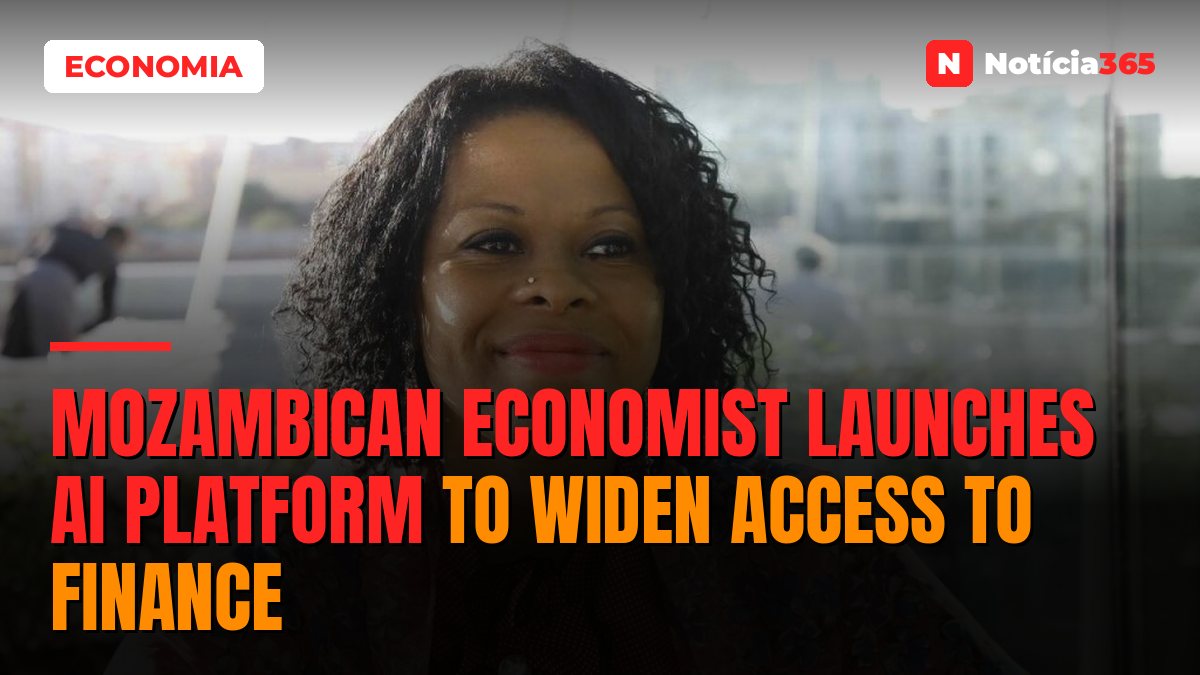

Mozambican economist Tânia Tomé has launched Succenergy in Maputo — an Artificial Intelligence platform designed to help small entrepreneurs structure projects, develop financial literacy and prepare for access to bank financing. The tool enables users to monitor financial indicators, calculate cash flows and assess business creditworthiness, addressing the difficulties faced by business owners with limited financial management knowledge.
According to Tomé, the platform, already present in more than 20 countries, combines technology, financial education and leadership development to support entrepreneurs, professionals and managers. The initiative also aims to reach small business owners who lack organised accounting records or the knowledge required to prepare proposals that meet the requirements of financial institutions.
“I bring to this platform, which is the first from the Portuguese-speaking African countries (PALOP), the essence of combining our humanity, the need we have for effective leaders in current leadership positions, and education as a tool for training, improvement and growth to enhance the development of our nations,” Tomé said.
The economist explained that the initiative targets different user profiles, from informal-sector entrepreneurs to professionals and executives, seeking to promote financial inclusion through digital learning and business monitoring tools.
“We will support the way in which they not only learn financial literacy, but are able to achieve results using the platform,” she said.
One of the platform’s planned features is the creation of a business creditworthiness index, designed to track the financial progress of users and facilitate the preparation of future financing applications.
“These people who cannot maintain organised accounting records over time will be able to have an index that will track their progress,” she added.
Tomé also highlighted the importance of responsible use of Artificial Intelligence, arguing that technology should contribute to greater efficiency without compromising the human dimension of processes.
“If we maintain our sense of humanity in everything we do, AI only allows for the efficient acceleration of our work,” she said.
Education and Digital Transformation
At the launch event, Minister of Education and Culture Edson Macuácua said the platform represents a contribution to innovation and digital transformation in Mozambique, highlighting its potential to bring education closer to the demands of the labour market.
“This tool is not just a technological innovation, but an engine of educational, social and economic transformation. Modern education is no longer confined to the four walls of a traditional classroom. It expands through digital ecosystems that promote inclusion, leadership and high performance,” he declared.
According to the minister, the platform addresses national priorities related to the democratisation of knowledge, entrepreneurship and the development of skills suited to market requirements.
“We maintain that our national education system must move in close alignment with market dynamics. Tânia Tomé’s platform prepares the leaders of the future, equipping them with practical management skills, resilience and decision-making ability,” he said.
Macuácua also called for greater recognition of knowledge produced within the country, criticising the fact that much scientific work does not find practical application in communities.
“One of the critical aspects of our Mozambican or African scientist is that we often produce, investigate, research and, in some cases, publish, but many of our works end up archived and are frequently not appropriated by the community,” he said.
Source: Diário Económico
Original article: https://www.diarioeconomico.co.mz/?p=560761