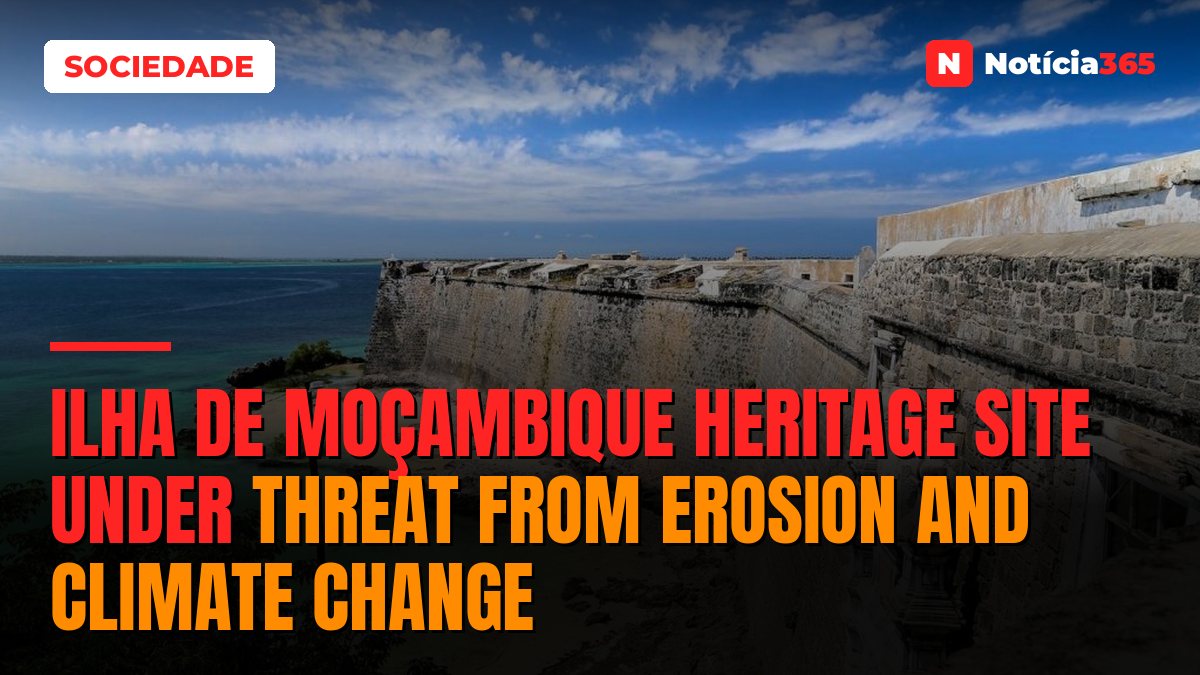

Infrastructure decay and advancing coastal erosion are posing new challenges to the conservation of Ilha de Moçambique, a UNESCO World Heritage Site since 1991. As the effects of climate change intensify, authorities are seeking to mobilise resources to restore the island's historic buildings and shield it from sea damage.
Located in the northern province of Nampula, the island was occupied by the Portuguese more than 500 years ago and once hosted the poet Luís Vaz de Camões. Today, its architectural heritage shows clear signs of deterioration driven by humidity and harsh environmental conditions, visible in cracked walls, faded paintwork, and facades corroded by seawater.
The degradation has also affected the island's encircling barrier wall, a structure that protects the island from the encroachment of the sea. It has sustained repeated damage from the force of the ocean, compounded by cyclones that in recent years have caused destruction not only to heritage buildings but also to residential properties.

"The information that infrastructure is at risk stems from the times we are living in — climate change. The island has been battered by recurring cyclones that cause destruction, not only of heritage infrastructure but also of homes. The island must therefore become resilient to the effects of climate change," said Cláudio Zunguene, Director of the Ilha de Moçambique Conservation Office, speaking to Lusa.
According to Zunguene, the island's current state of conservation is "reasonable", though still far from desirable. Coastal erosion is particularly visible near the fortress, the Jardim da Memória, and along the counter-coast, where the force of the water has progressively worn away the encircling barrier wall, making intervention necessary to halt the sea's advance.
Restoring the barrier wall requires "a great deal of money", and an assessment is being prepared to determine the cost of the necessary works. In the meantime, the Conservation Office has been working to mobilise financing for other interventions, having secured US$392,000 from the World Monuments Fund (WMF), an international non-profit organisation dedicated to the preservation and conservation of cultural and historical heritage around the world, to rehabilitate select infrastructure.
Home to approximately 92,000 inhabitants, Ilha de Moçambique also faces difficulties affecting tourism. The district government acknowledges that cyclones, flooding, and humidity are contributing to the degradation of the heritage site, with consequences for businesses that depend on the tourism sector.
According to Jasmim Raúl Acabar, Permanent Secretary of the district government, at least 15 establishments — including hotels, restaurants, and guesthouses — have already closed. He acknowledged the need for greater investment and stated that the government continues to seek support from its partners to ensure the island's conservation.
The preservation of this World Heritage Site demands an effort that extends beyond national borders. Zunguene called for the continued support of UNESCO and other international organisations, appealing for them to maintain a "special affection" for the island in light of the growing risks associated with climate change.
Source: Diário Económico
Original article: https://www.diarioeconomico.co.mz/?p=559837