
President Daniel Chapo on Monday, 9 June, presided over the launch of the 2026-27 agricultural campaign in the district of Sanga, Niassa province, in a ceremony aimed at boosting production, strengthening food and nutritional security, and driving the transformation of the agrarian sector.
According to a statement from the Presidency, the new campaign forms part of the government’s broader efforts to develop a more productive, resilient, and market-oriented agricultural sector, through the strengthening of agribusiness and a gradual transition away from predominantly subsistence farming towards commercial activity.
Among the campaign’s key priorities is the adoption of measures to mitigate the effects of climate change, with particular attention to the El Niño phenomenon, given forecasts of irregular rainfall and the likelihood of prolonged drought periods.
These measures are expected to focus primarily on the central and southern regions of the country, which are considered most vulnerable to rainfall shortages, with the goal of reducing risks to agricultural production and ensuring greater resilience of farming systems.
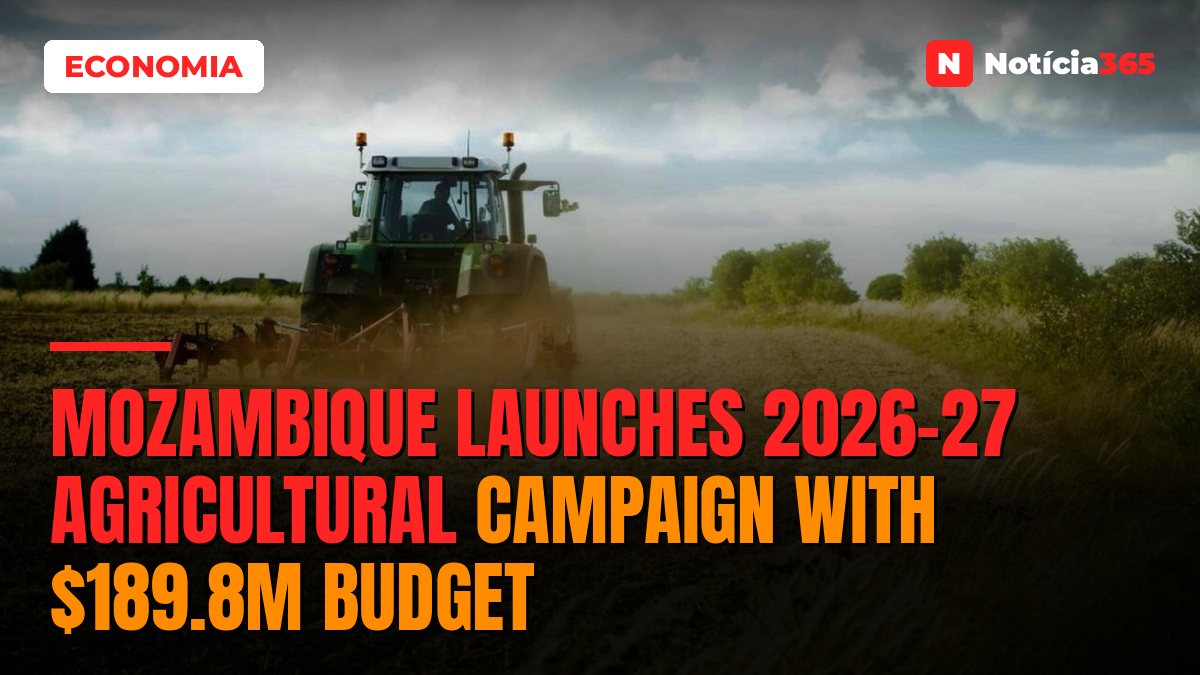
Last week, the Minister of Agriculture, Environment and Fisheries, Roberto Mito Albino, announced that the government plans to mobilise US$189.8 million to finance the 2026-27 agricultural campaign. Of that total, US$94.7 million is earmarked for emergency support to producers affected by extreme weather events, while the remaining US$95.1 million will be directed towards agribusiness development. Funding will be provided by the government alongside international partners, including the World Bank, the African Development Bank (AfDB), and the International Fund for Agricultural Development (IFAD).
According to the statement, the resources will be applied to increasing production and productivity, strengthening value chains, and promoting the transition from subsistence agriculture to market-oriented commercial activity.
Of the total budget, US$94.7 million will be channelled towards measures addressing the effects of the El Niño climate phenomenon, through the provision of direct and free assistance to at-risk producers.
Support will include the distribution of agricultural kits, silos, irrigation equipment, and animal feed supplements, with the objective of reinforcing food security and improving producers’ capacity to respond to the effects of climate change.
The remaining US$95.1 million will be allocated to agribusiness development through the creation of credit lines and institutional support mechanisms covering seeds, agricultural inputs, mechanisation, irrigation, livestock, fisheries, forestry, and agricultural extension services.
As part of the plan’s implementation, the government intends to make available 905 motor cultivators, 251 tractors, 2,075 tonnes of seeds, 3,532 irrigation systems, and 3,363 motor pumps and irrigation kits with coverage capacities of two, five, and ten hectares.
Source: Diário Económico
Original article: https://www.diarioeconomico.co.mz/2026/11/09/negocios/agronegocios/campanha-agricola-2026-27-governo-quer-impulsionar-producao-e-comercializacao/