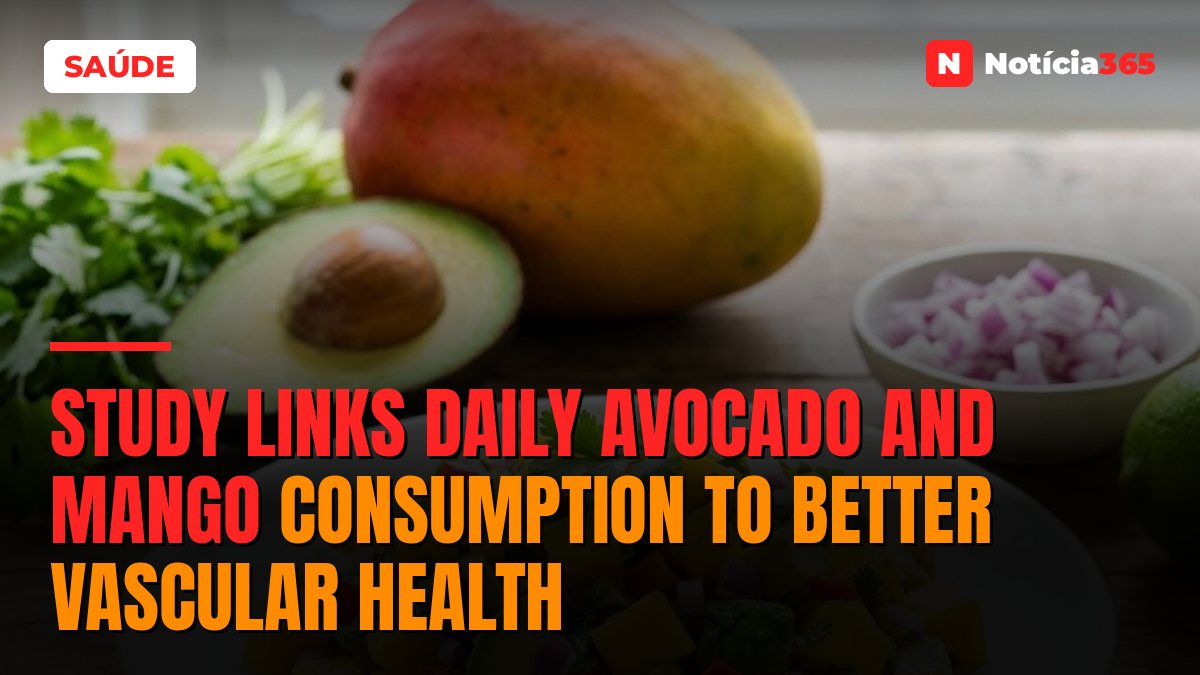

Daily consumption of avocado and mango may help improve cardiovascular health, particularly the function of blood vessels. That is the conclusion of a study conducted by researchers at the Illinois Institute of Technology in the United States, which identified improvements in vascular function among adults with pre-diabetes who were overweight or obese.
Published in the Journal of the American Heart Association, the study involved 82 adults aged between 25 and 60, divided into two groups over eight weeks. One group incorporated one Hass avocado and one cup of fresh mango into their daily diet, while the other consumed alternative foods with an equivalent caloric value but lower fat and fibre content.
The results revealed significant differences in vascular function. In the group that consumed both fruits, flow-mediated dilation — an indicator of the arteries’ capacity to dilate — reached 6.7%, compared with 4.6% in the control group. This difference suggests a favourable effect of the dietary intervention on blood vessel function.
According to the Terra portal, the research also identified favourable outcomes in some blood pressure indicators, particularly among men. In this group, central blood pressure fell by an average of 1.9 mmHg among participants who consumed avocado and mango, while it rose by approximately 5 mmHg in the control group. Diastolic blood pressure also showed a more favourable trend among consumers of the two fruits.
What Could Explain the Benefits?
The researchers point to the nutritional composition of the two fruits as a possible explanation for the findings. Avocado is rich in monounsaturated fats, fibre, and potassium — nutrients associated with cardiovascular health. Mango, in turn, provides vitamin C, fibre, and antioxidant compounds, including carotenoids and polyphenols, which help protect cells against oxidative stress.
Despite the improvements observed in vascular function, the study did not identify statistically significant changes in body weight, glucose levels, or most of the other metabolic and inflammatory indicators assessed. As a result, the findings do not support the conclusion that consuming these fruits alone is sufficient to prevent cardiovascular disease or control diabetes.
The researchers also acknowledge certain limitations, notably the study’s duration of only eight weeks and the specific characteristics of the participants. Although 82 adults were recruited, only 68 completed the planned procedures, reinforcing the need for more comprehensive and longer-term studies to assess whether the observed effects persist over time.
Even so, the results suggest that the regular inclusion of nutritionally rich foods such as avocado and mango as part of a balanced diet may help improve certain cardiovascular health indicators, without replacing medical supervision or other preventive measures.
Source: Diário Económico
Original article: https://www.diarioeconomico.co.mz/?p=558557