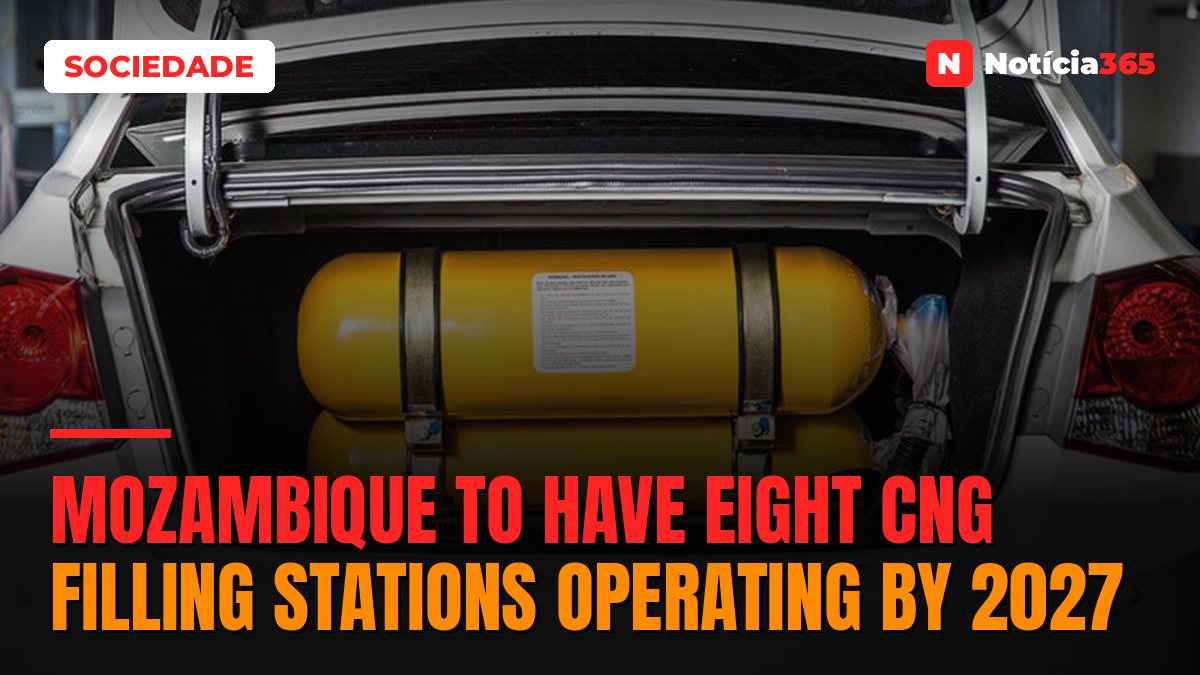

The Mozambican government is installing eight compressed natural gas (CNG) filling stations across the country's three southern provinces as part of a strategy to diversify energy sources and reduce dependence on liquid fuels amid persistent supply difficulties. The infrastructure is expected to be operational by 2027, the Minister of Mineral Resources and Energy, Estêvão Pale, announced on Wednesday (4).
"The government is promoting the expansion of access to natural gas for vehicles through the implementation of a structured programme. To this end, the installation of three new filling stations is under way in the city and province of Maputo, two in Gaza province and three in Inhambane," the minister said.
Speaking during a question-and-answer session with members of parliament, Estêvão Pale explained that the programme also envisages expanding the use of natural gas-powered buses in public transport. He acknowledged, however, that these alternatives would not immediately resolve the current fuel supply constraints affecting households, transport operators and the agricultural sector.
Quoted by the Lusa news agency, the minister said the government had adopted several measures to minimise supply difficulties, including a temporary ban on the re-export of fuels destined for domestic consumption, while safeguarding the regular transit of products to other countries.
"We have reinforced the operational capacity of our company Petromoc, enabling it to make additional fuel volumes available and supply retail operators regardless of the existence of prior contracts with other distributors," he said.
Estêvão Pale added that the government had intensified loading operations at the country's main terminals — Maputo, Beira, Nacala and Pemba — with plans to extend operating hours and carry out operations on Saturdays whenever necessary to accelerate fuel distribution.
Between April and May, shortages of petrol and diesel caused long queues at filling stations and disrupted supply to consumers and businesses. At the time, the government attributed part of the difficulties to the impact of the Middle East conflict on international energy markets and supply chains, noting that around 80% of Mozambique's fuel imports originated in that region and transited through the Strait of Hormuz.
Separately, the Bank of Mozambique acknowledged difficulties in accessing foreign exchange to finance fuel imports, which the central bank linked to financial capacity constraints at some companies in the sector.
Central bank data show that the country spent US$236.4 million on fuel imports in the first quarter of 2026, a 1.4% decrease from US$239.6 million recorded in the same period of 2025.
In May, in response to the effects of the supply crisis and rising international prices, the government decided to raise administered fuel prices — a move that resulted in a 45.5% increase in the price of diesel and a 12.1% rise in petrol.
Source: Diário Económico
Original article: https://www.diarioeconomico.co.mz/2026/11/04/oilgas/governo-preve-oito-postos-de-gas-veicular-em-funcionamento-ate-2027/