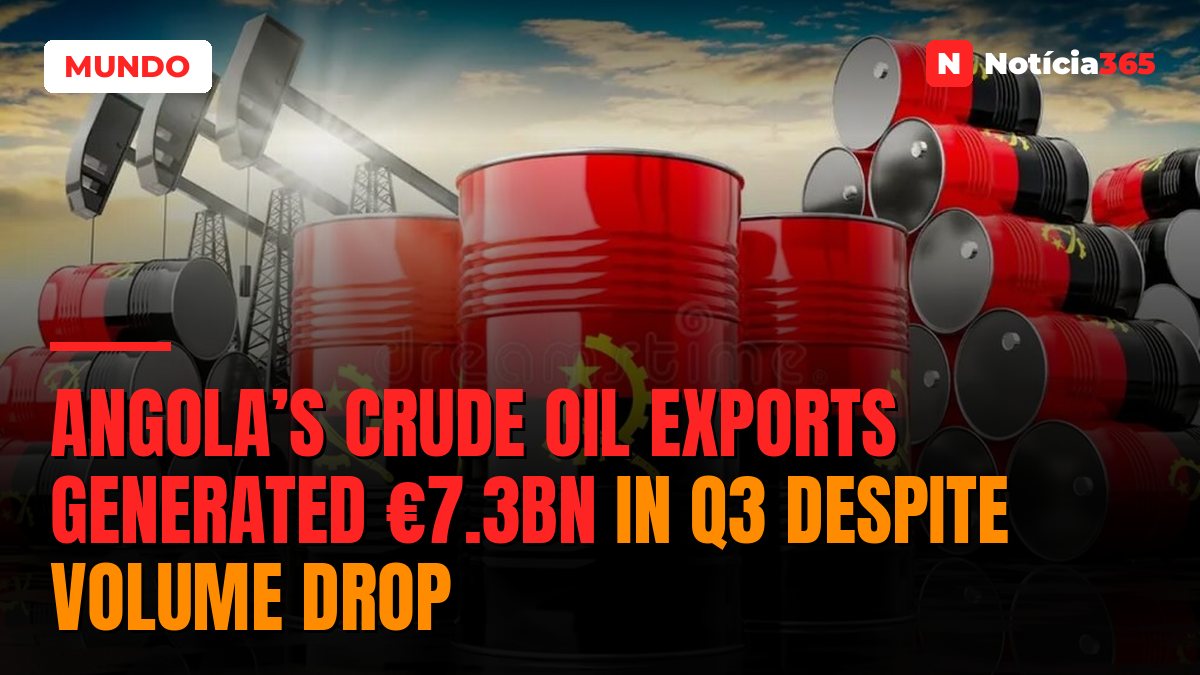

Angola generated €7.3 billion from crude oil exports in the third quarter of 2026, even as the country shipped fewer barrels than in the same period a year earlier. Data released by the Angolan government show that higher international oil prices drove annual revenue gains despite the reduction in export volumes.
According to the Secretary of State for Petroleum and Gas, José Barroso, Angola exported approximately 88.74 million barrels of crude oil at a weighted average price of US$93.825 per barrel. Speaking at the opening of an event dedicated to crude oil and natural gas exports, Barroso said export volumes rose 0.22% compared with the second quarter of 2026 but fell 2.87% against the same period in 2025.
Despite the year-on-year revenue increase, the gross value of oil exports declined 6.71% relative to the second quarter of 2026. Compared with the third quarter of 2025, however, export revenues grew 31.82%, driven by the appreciation of crude prices on international markets, according to Barroso.
China remained the primary destination for Angolan crude, accounting for 39.86% of total exports. India ranked second with 18.45%, followed by Italy at 5.63% and Spain at 5.03%. The figures confirm the continued importance of Asian and European markets to Angola’s oil export base.
In the natural gas sector, Angola exported approximately 788,960 metric tonnes, of which 94.44% was liquefied natural gas (LNG). That volume represented a decline of 48.11% from the second quarter of 2026 and 51.49% below the year-earlier period. According to the data presented, the reduction was linked to a scheduled maintenance shutdown at the Angola LNG (ALNG) plant.
Gross revenues from natural gas exports totalled approximately US$867.1 million, down 30.12% from the previous quarter and 3.40% below the figure recorded in the third quarter of 2025. India was the leading destination for Angolan LNG, absorbing 83.14% of exported volumes, followed by South Korea at 8.64% and Indonesia at 8.21%.
Barroso said the performance of the oil sector depends on external factors including the trajectory of the global economy, the security of maritime shipping routes, decisions by producing countries, and demand from key consumer markets. He called for improved market monitoring and greater coordination between public institutions and companies operating in the sector.
The Secretary of State also stressed the need to analyse results, identify factors affecting export performance, and adopt measures to reinforce the competitiveness of Angolan hydrocarbons while protecting state interests. Among the factors he highlighted were global demand trends, decisions by major producers, strategic reserves, and geopolitical developments in producing regions and along transport routes.
Source: Diário Económico
Original article: https://www.diarioeconomico.co.mz/2026/10/29/mundo/angola/angola-exportacoes-petroliferas-geraram-73-mil-milhoes-de-euros-no-terceiro-trimestre/