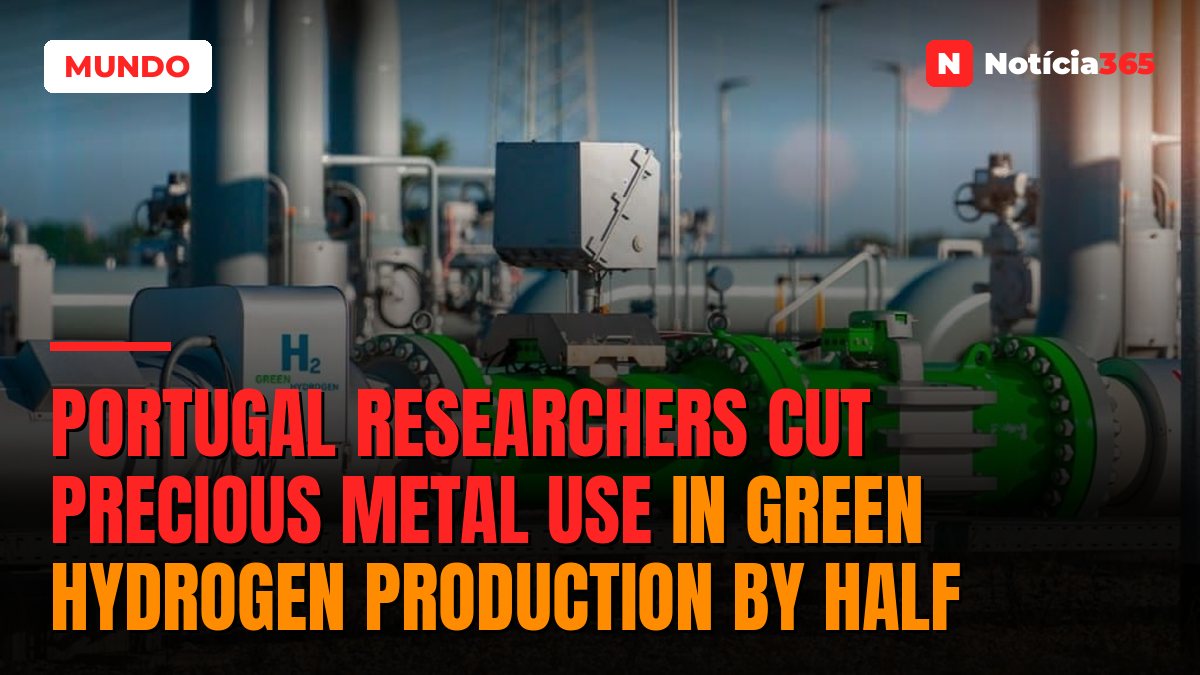

A research team at the International Iberian Nanotechnology Laboratory (INL) in Braga, Portugal, has developed a catalyst that uses roughly half the precious metals found in a leading commercial alternative, while delivering superior performance in laboratory tests. The innovation could contribute to reducing the cost of green hydrogen production.
The material, developed by the Kolen’ko research group, combines platinum, nickel, and ruthenium, bringing the proportion of precious metals down to 20.5% — compared with the 40% platinum content used in the benchmark commercial catalyst.
The technology is designed for electrolysers, devices that use electricity to split water into hydrogen and oxygen. When powered by renewable energy sources, this process enables the production of green hydrogen, but it relies on rare and expensive materials.

In tests conducted in an experimental cell, the new catalyst achieved a current density of 1.0 ampere per square centimetre at a voltage of 1.6 volts. At a temperature of 60°C, it maintained stable operation for more than 300 hours, while the commercial material used for comparison showed a progressive decline in performance.
One of the distinctive features of the new alloy is its ability to improve its activity during operation. The passage of electric current transforms a surface layer of nickel oxide, exposing the metals that promote hydrogen production.
To develop the material, the researchers produced particles approximately 1.5 nanometres in diameter, distributed over a graphene support structure. The process uses a continuous-flow reactor, which enables precise control over alloy formation and produces a more uniform composition.
The findings, published in the scientific journal Chemical Engineering Journal, represent an advance in the search for more cost-effective and durable catalysts. However, the technology still needs to be tested in larger-scale electrolysers to confirm its industrial viability.
The development comes at a time when the European Union is targeting annual production of 10 million tonnes of renewable hydrogen by 2030 — a goal that depends, among other factors, on reducing the cost of electrolysis equipment.
Source: Diário Económico
Original article: https://www.diarioeconomico.co.mz/?p=553828