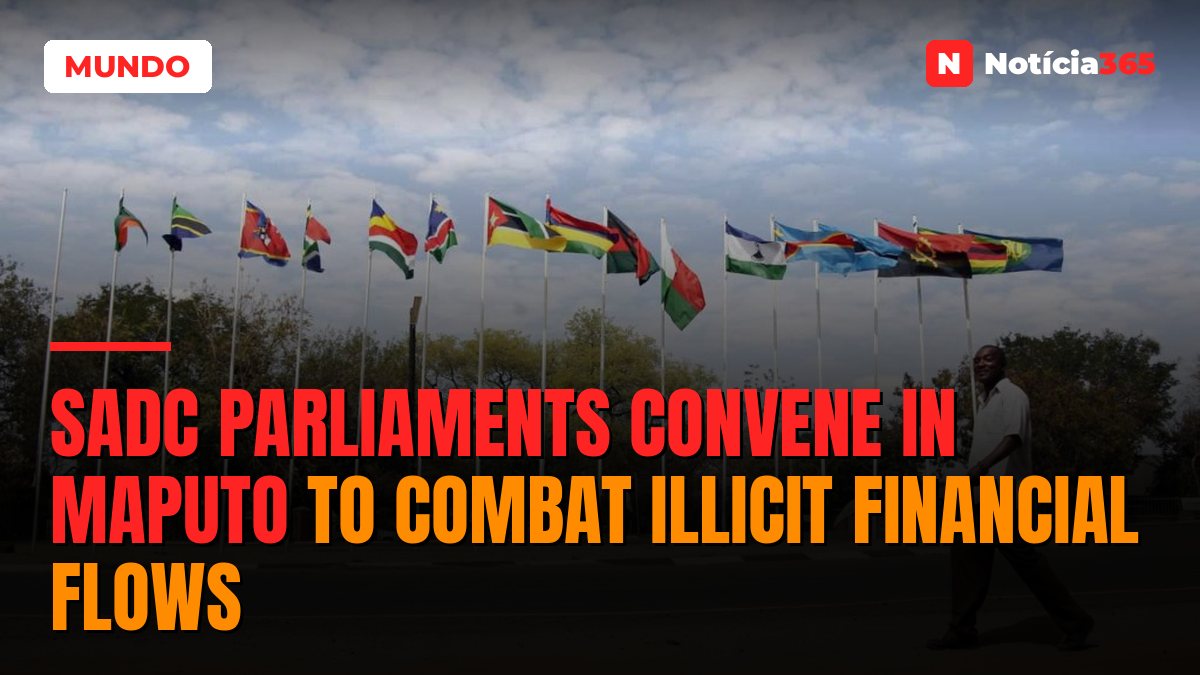

Parliaments of the Southern African Development Community (SADC) are convening in Maputo from 21 to 24 October to debate strategies for combating illicit financial flows, recovering stolen assets, and strengthening oversight of public finances. The meeting aims to foster regional cooperation in the prevention of financial crimes and in promoting accountability for the use of public resources.
The gathering was announced on Thursday at a press conference in Maputo by Eneas Comiche, chair of the Planning and Budget Committee of Mozambique's Assembly of the Republic, according to Lusa.
Organised by the Southern African Development Community Organisation of Public Accounts Committees (SADCOPAC), the meeting forms part of a peer review and training programme targeting members of public accounts committees and other parliamentary structures responsible for financial oversight across the region. It is being held under the theme: "Strengthening Oversight and Combating Illicit Financial Flows: the Role of Public Accounts Committees in Promoting Accountability, Climate-Sensitive Public Financial Management, and the African Common Position on Asset Recovery".

According to Comiche, the initiative is designed to facilitate the sharing of experiences among parliaments, with a focus on three key areas: mechanisms for curbing illicit capital outflows, recovery of assets of criminal origin, and implementation of recommendations arising from parliamentary oversight. Participants will also examine the integration of climate considerations into public financial management and oversight, in line with the African common position on asset recovery and the African Union's Agenda 2063. Also on the agenda are practical oversight tools, mechanisms for institutional cooperation, and measures to improve transparency and accountability.
Comiche argued that combating financial crime is a priority for countries in the region, given the direct impact that misappropriation and illicit outflows have on public budgets and on states' capacity to fund essential services. "These issues matter to parliamentary oversight because public resources belong to citizens. When expenditure is poorly executed, when a contract is tainted, or when money leaves the country illegally, what is lost is the school that is never built, the health centre that never opens or runs out of medicines, the road that is never built or rehabilitated and that leaves production with no route to market," he said.
In Comiche's view, illicit financial flows undermine economic and social development by diverting resources that could otherwise fund infrastructure, improve public services, and stimulate productive activity. "Combating these flows is a matter of development and of sovereignty. Money that leaves illicitly is money that is missing from the state budget — from our states' budgets," he added.
Comiche noted that the African continent has already lost tens of billions of euros to illicit financial practices, underscoring the need for more effective oversight mechanisms and greater cooperation among institutions responsible for the prevention and combating of economic crime.
During the meeting, Mozambique is expected to present its experience in public accounts oversight, including the legal instruments governing decentralised administration and the institutional mechanisms for controlling the use of state resources.
On the recovery of assets of illicit origin, Mozambique has operated since 2022 a Central Asset Recovery Office (GCRA), integrated within the Office of the Attorney General and mandated to investigate, identify, trace, seize, and recover assets linked to criminal activities. In its first year of operation, the office announced it had recovered assets valued at more than one billion meticais, including 30 properties and 12 vehicles.
Founded in 2003, SADCOPAC brings together the parliamentary public accounts oversight committees of SADC member states. Its principal objectives are to strengthen the institutional capacity of parliaments, promote transparency in financial management, and reinforce accountability among public administrators.
Source: Diário Económico
Original article: https://www.diarioeconomico.co.mz/2026/10/15/mundo/sadc/maputo-parlamentos-da-sadc-debatem-estrategias-para-combater-fluxos-financeiros-ilicitos/