
Indigenous children across the United States have been building small programmable robots to learn and preserve their mother tongues, as part of an initiative created by young activist Danielle Boyer to support communities whose languages face the risk of extinction.
Boyer, a member of the Chippewa Tribe of Sault Ste. Marie, grew up witnessing the decline of Anishinaabemowin — the language spoken by her grandmother. The language, which encompasses Potawatomi, Odawa, and Ojibwe, is currently spoken by fewer than ten thousand people in the United States and approximately 25,000 in Canada, according to figures cited by the initiative.
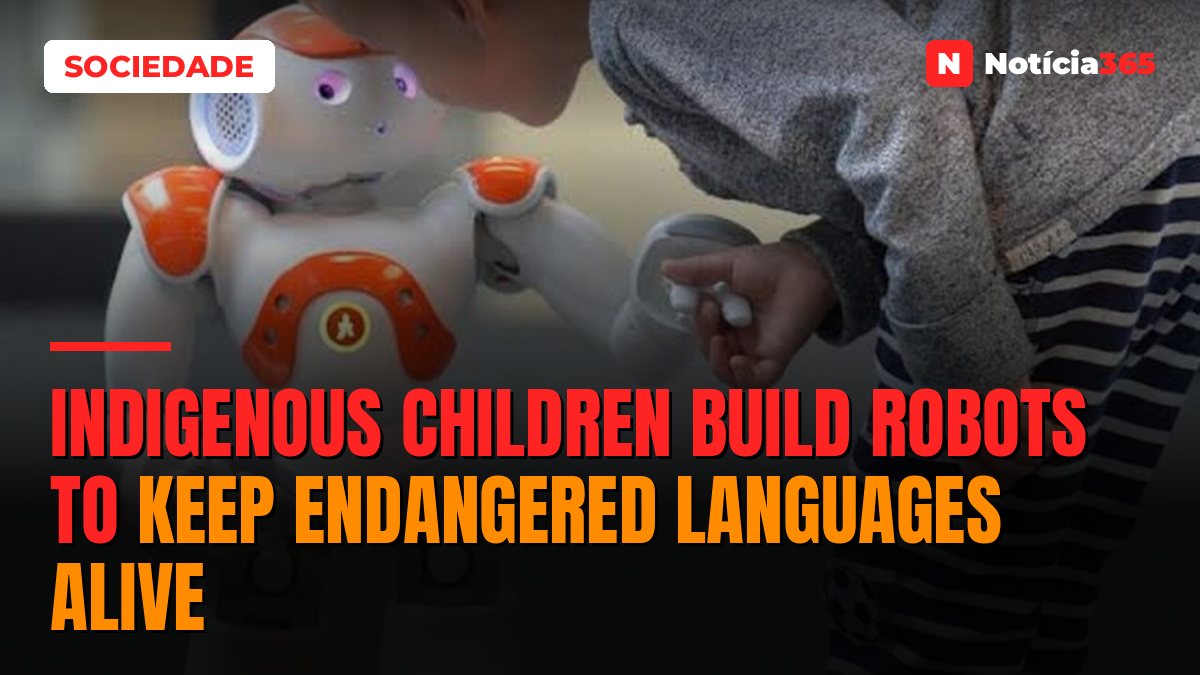
At the age of 18, Boyer founded a non-profit organisation and began developing the SkoBots — small robots shaped like forest animals and decorated with indigenous floral motifs. The devices are programmed by children to respond to questions in their own languages. A SkoBot can, for example, respond with ‘makwa’ when asked for the word for bear, or ‘ajijaak’ for heron. The concept uses technology as a learning tool that brings children closer to their languages and cultures.
Now 25, Boyer has guided hundreds of indigenous children across different regions of the United States. Among them is Holden Hoy, a 12-year-old Ojibwe student at JKL Bahweting Anishinaabe School in Michigan.
Hoy named his robot Sabe — an Anishinaabemowin word associated with Bigfoot. In Ojibwe culture, the figure represents honesty, one of the seven sacred teachings. For a school science fair, the student programmed the robot to respond to three questions using his own recorded voice.
The SkoBots do not use generative artificial intelligence. The system operates on pre-recorded audio clips that are triggered when the robot identifies specific keywords. In this way, the responses played back correspond to words previously selected and recorded by the children themselves.
The decision not to use generative AI models is linked to concerns about accuracy and the preservation of indigenous knowledge. Boyer has noted that systems such as ChatGPT have produced incorrect words in Anishinaabemowin, which could contribute to the miseducation of language learners.
The initiative also raises broader questions about the use of artificial intelligence to engage with indigenous languages and knowledge. Boyer argues that cultural and linguistic information considered sacred should not be handed over to systems developed by companies outside indigenous communities.
The SkoBots aim to combine coding and language learning without displacing community knowledge, using technology as an instrument to keep threatened mother tongues alive and strengthen the intergenerational transmission of culture.
Source: Diário Económico
Original article: https://www.diarioeconomico.co.mz/?p=550648